Watch: recognised talks on Sanskrit, Pāṇini and AI
15 parts of Sanskrit and AI and 50 parts of Pāṇini Teaches Future AI, plus 157 talks from universities, IITs, UNESCO, conference sessions (ISCLS, World Sanskrit Conference) and recognised scholars, and 177 videos from 7 complete courses and lecture series (NPTEL courses from IIT Bombay and IIT Madras, the University of Hyderabad's Saṃsādhanī course, a JNU–University of Delhi workshop and others), plus 2 videos by the Founding Editor on X. Each one was checked as public on YouTube on 25 Nov 2026; views are a snapshot from that day. Tap a picture to play it here (privacy-enhanced youtube-nocookie player, nothing loads until you tap) or the title to open YouTube.
How to read theseVideos are leads, not sources. The journal cites the papers and editions behind a talk, never the talk alone. Notes marked “Lead” flag what to check.
Free to use: Dr P.R.K. Varma has placed these slides and PDFs, and his own videos under From the Editor, in the public domain (CC0 1.0). Anyone may copy, share, adapt or use them for any purpose, without asking.
Sanskrit and AI · 15 parts
The Founding Editor's 15-part series, first published on the Journal of the AI Universe Watch page and now kept here. Tap a picture to play it on the page (privacy-enhanced youtube-nocookie player) or the title to open YouTube.
The Founding Editor's book of the same title is on the Books page, with a free PDF download: Sanskrit and AI.
Why it is here: Dr P.R.K. Varma, Founding Editor. The Founding Editor's own series, first carried on the Journal of the AI Universe Watch page. Checked as public and embeddable via YouTube oEmbed.
Why it is here: Dr P.R.K. Varma, Founding Editor. The Founding Editor's own series, first carried on the Journal of the AI Universe Watch page. Checked as public and embeddable via YouTube oEmbed.
Why it is here: Dr P.R.K. Varma, Founding Editor. The Founding Editor's own series, first carried on the Journal of the AI Universe Watch page. Checked as public and embeddable via YouTube oEmbed.
Why it is here: Dr P.R.K. Varma, Founding Editor. The Founding Editor's own series, first carried on the Journal of the AI Universe Watch page. Checked as public and embeddable via YouTube oEmbed.
Why it is here: Dr P.R.K. Varma, Founding Editor. The Founding Editor's own series, first carried on the Journal of the AI Universe Watch page. Checked as public and embeddable via YouTube oEmbed.
Why it is here: Dr P.R.K. Varma, Founding Editor. The Founding Editor's own series, first carried on the Journal of the AI Universe Watch page. Checked as public and embeddable via YouTube oEmbed.
Why it is here: Dr P.R.K. Varma, Founding Editor. The Founding Editor's own series, first carried on the Journal of the AI Universe Watch page. Checked as public and embeddable via YouTube oEmbed.
Why it is here: Dr P.R.K. Varma, Founding Editor. The Founding Editor's own series, first carried on the Journal of the AI Universe Watch page. Checked as public and embeddable via YouTube oEmbed.
Why it is here: Dr P.R.K. Varma, Founding Editor. The Founding Editor's own series, first carried on the Journal of the AI Universe Watch page. Checked as public and embeddable via YouTube oEmbed.
Why it is here: Dr P.R.K. Varma, Founding Editor. The Founding Editor's own series, first carried on the Journal of the AI Universe Watch page. Checked as public and embeddable via YouTube oEmbed.
Why it is here: Dr P.R.K. Varma, Founding Editor. The Founding Editor's own series, first carried on the Journal of the AI Universe Watch page. Checked as public and embeddable via YouTube oEmbed.
Why it is here: Dr P.R.K. Varma, Founding Editor. The Founding Editor's own series, first carried on the Journal of the AI Universe Watch page. Checked as public and embeddable via YouTube oEmbed.
Why it is here: Dr P.R.K. Varma, Founding Editor. The Founding Editor's own series, first carried on the Journal of the AI Universe Watch page. Checked as public and embeddable via YouTube oEmbed.
Why it is here: Dr P.R.K. Varma, Founding Editor. The Founding Editor's own series, first carried on the Journal of the AI Universe Watch page. Checked as public and embeddable via YouTube oEmbed.
Why it is here: Dr P.R.K. Varma, Founding Editor. The Founding Editor's own series, first carried on the Journal of the AI Universe Watch page. Checked as public and embeddable via YouTube oEmbed.
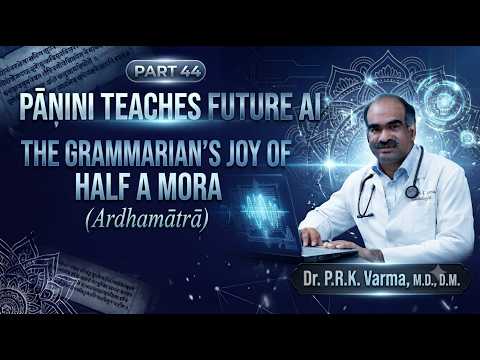
A playlist curated by Dr P.R.K. Varma, Founding Editor. It runs from Pāṇini's grammar through later questions in Sanskrit, AI and robot action. The series holds 50 public, embeddable videos (titled parts 1–50). Cards follow the original playlist order, with part 24 placed in its numerical position after part 23. Each video is credited to its original YouTube channel. Tap a picture to play it on the page (privacy-enhanced youtube-nocookie player) or the title to open YouTube.
Playlist curated by Dr P.R.K. Varma (playlist curator). Each video is credited to its original YouTube channel. Open the YouTube playlist.
The Founding Editor's book of the same title is on the Books page, with a free PDF download: Pāṇini Teaches Future AI.
Downloadable PowerPoint and PDF slides will appear on each part when the source decks are added. The Watch downloads on the Journal of the AI Universe belong to its separate AI for Beginners slide series, which stays there.
Why it is here: Dr P.R.K. Varma, Founding Editor. From the playlist “Pāṇini Teaches Future AI”, curated by Dr P.R.K. Varma. The video is from the YouTube channel DrVARMA PRK. Checked as public and embeddable via YouTube oEmbed.
Why it is here: Dr P.R.K. Varma, Founding Editor. From the playlist “Pāṇini Teaches Future AI”, curated by Dr P.R.K. Varma. The video is from the YouTube channel DrVARMA PRK. Checked as public and embeddable via YouTube oEmbed.
Why it is here: Dr P.R.K. Varma, Founding Editor. From the playlist “Pāṇini Teaches Future AI”, curated by Dr P.R.K. Varma. The video is from the YouTube channel DrVARMA PRK. Checked as public and embeddable via YouTube oEmbed.
Why it is here: Dr P.R.K. Varma, Founding Editor. From the playlist “Pāṇini Teaches Future AI”, curated by Dr P.R.K. Varma. The video is from the YouTube channel DrVARMA PRK. Checked as public and embeddable via YouTube oEmbed.
Why it is here: Dr P.R.K. Varma, Founding Editor. From the playlist “Pāṇini Teaches Future AI”, curated by Dr P.R.K. Varma. The video is from the YouTube channel DrVARMA PRK. Checked as public and embeddable via YouTube oEmbed.
Why it is here: Dr P.R.K. Varma, Founding Editor. From the playlist “Pāṇini Teaches Future AI”, curated by Dr P.R.K. Varma. The video is from the YouTube channel DrVARMA PRK. Checked as public and embeddable via YouTube oEmbed.
Why it is here: Dr P.R.K. Varma, Founding Editor. From the playlist “Pāṇini Teaches Future AI”, curated by Dr P.R.K. Varma. The video is from the YouTube channel DrVARMA PRK. Checked as public and embeddable via YouTube oEmbed.
Why it is here: Dr P.R.K. Varma, Founding Editor. From the playlist “Pāṇini Teaches Future AI”, curated by Dr P.R.K. Varma. The video is from the YouTube channel DrVARMA PRK. Checked as public and embeddable via YouTube oEmbed.
Why it is here: Dr P.R.K. Varma, Founding Editor. From the playlist “Pāṇini Teaches Future AI”, curated by Dr P.R.K. Varma. The video is from the YouTube channel DrVARMA PRK. Checked as public and embeddable via YouTube oEmbed.
Why it is here: Dr P.R.K. Varma, Founding Editor. From the playlist “Pāṇini Teaches Future AI”, curated by Dr P.R.K. Varma. The video is from the YouTube channel DrVARMA PRK. Checked as public and embeddable via YouTube oEmbed.
Why it is here: Dr P.R.K. Varma, Founding Editor. From the playlist “Pāṇini Teaches Future AI”, curated by Dr P.R.K. Varma. The video is from the YouTube channel DrVARMA PRK. Checked as public and embeddable via YouTube oEmbed.
Why it is here: Dr P.R.K. Varma, Founding Editor. From the playlist “Pāṇini Teaches Future AI”, curated by Dr P.R.K. Varma. The video is from the YouTube channel DrVARMA PRK. Checked as public and embeddable via YouTube oEmbed.
Why it is here: Dr P.R.K. Varma, Founding Editor. From the playlist “Pāṇini Teaches Future AI”, curated by Dr P.R.K. Varma. The video is from the YouTube channel DrVARMA PRK. Checked as public and embeddable via YouTube oEmbed.
Why it is here: Dr P.R.K. Varma, Founding Editor. From the playlist “Pāṇini Teaches Future AI”, curated by Dr P.R.K. Varma. The video is from the YouTube channel DrVARMA PRK. Checked as public and embeddable via YouTube oEmbed.
Why it is here: Dr P.R.K. Varma, Founding Editor. From the playlist “Pāṇini Teaches Future AI”, curated by Dr P.R.K. Varma. The video is from the YouTube channel DrVARMA PRK. Checked as public and embeddable via YouTube oEmbed.
Why it is here: Dr P.R.K. Varma, Founding Editor. From the playlist “Pāṇini Teaches Future AI”, curated by Dr P.R.K. Varma. The video is from the YouTube channel DrVARMA PRK. Checked as public and embeddable via YouTube oEmbed.
Why it is here: Dr P.R.K. Varma, Founding Editor. From the playlist “Pāṇini Teaches Future AI”, curated by Dr P.R.K. Varma. The video is from the YouTube channel DrVARMA PRK. Checked as public and embeddable via YouTube oEmbed.
Why it is here: Dr P.R.K. Varma, Founding Editor. From the playlist “Pāṇini Teaches Future AI”, curated by Dr P.R.K. Varma. The video is from the YouTube channel DrVARMA PRK. Checked as public and embeddable via YouTube oEmbed.
Why it is here: Dr P.R.K. Varma, Founding Editor. From the playlist “Pāṇini Teaches Future AI”, curated by Dr P.R.K. Varma. The video is from the YouTube channel DrVARMA PRK. Checked as public and embeddable via YouTube oEmbed.
Why it is here: Dr P.R.K. Varma, Founding Editor. From the playlist “Pāṇini Teaches Future AI”, curated by Dr P.R.K. Varma. The video is from the YouTube channel DrVARMA PRK. Checked as public and embeddable via YouTube oEmbed.
Why it is here: Dr P.R.K. Varma, Founding Editor. From the playlist “Pāṇini Teaches Future AI”, curated by Dr P.R.K. Varma. The video is from the YouTube channel DrVARMA PRK. Checked as public and embeddable via YouTube oEmbed.
Why it is here: Dr P.R.K. Varma, Founding Editor. From the playlist “Pāṇini Teaches Future AI”, curated by Dr P.R.K. Varma. The video is from the YouTube channel DrVARMA PRK. Checked as public and embeddable via YouTube oEmbed.
Why it is here: Dr P.R.K. Varma, Founding Editor. From the playlist “Pāṇini Teaches Future AI”, curated by Dr P.R.K. Varma. The video is from the YouTube channel DrVARMA PRK. Checked as public and embeddable via YouTube oEmbed.
Why it is here: Dr P.R.K. Varma, Founding Editor. From the playlist “Pāṇini Teaches Future AI”, curated by Dr P.R.K. Varma. The video is from the YouTube channel DrVARMA PRK. Checked as public and embeddable via YouTube oEmbed.
Why it is here: Dr P.R.K. Varma, Founding Editor. From the playlist “Pāṇini Teaches Future AI”, curated by Dr P.R.K. Varma. The video is from the YouTube channel DrVARMA PRK. Checked as public and embeddable via YouTube oEmbed.
Why it is here: Dr P.R.K. Varma, Founding Editor. From the playlist “Pāṇini Teaches Future AI”, curated by Dr P.R.K. Varma. The video is from the YouTube channel DrVARMA PRK. Checked as public and embeddable via YouTube oEmbed.
Why it is here: Dr P.R.K. Varma, Founding Editor. From the playlist “Pāṇini Teaches Future AI”, curated by Dr P.R.K. Varma. The video is from the YouTube channel DrVARMA PRK. Checked as public and embeddable via YouTube oEmbed.
Why it is here: Dr P.R.K. Varma, Founding Editor. From the playlist “Pāṇini Teaches Future AI”, curated by Dr P.R.K. Varma. The video is from the YouTube channel DrVARMA PRK. Checked as public and embeddable via YouTube oEmbed.
Why it is here: Dr P.R.K. Varma, Founding Editor. From the playlist “Pāṇini Teaches Future AI”, curated by Dr P.R.K. Varma. The video is from the YouTube channel DrVARMA PRK. Checked as public and embeddable via YouTube oEmbed.
Why it is here: Dr P.R.K. Varma, Founding Editor. From the playlist “Pāṇini Teaches Future AI”, curated by Dr P.R.K. Varma. The video is from the YouTube channel DrVARMA PRK. Checked as public and embeddable via YouTube oEmbed.
Why it is here: Dr P.R.K. Varma, Founding Editor. From the playlist “Pāṇini Teaches Future AI”, curated by Dr P.R.K. Varma. The video is from the YouTube channel DrVARMA PRK. Checked as public and embeddable via YouTube oEmbed.
Why it is here: Dr P.R.K. Varma, Founding Editor. From the playlist “Pāṇini Teaches Future AI”, curated by Dr P.R.K. Varma. The video is from the YouTube channel DrVARMA PRK. Checked as public and embeddable via YouTube oEmbed.
Why it is here: Dr P.R.K. Varma, Founding Editor. From the playlist “Pāṇini Teaches Future AI”, curated by Dr P.R.K. Varma. The video is from the YouTube channel DrVARMA PRK. Checked as public and embeddable via YouTube oEmbed.
Why it is here: Dr P.R.K. Varma, Founding Editor. From the playlist “Pāṇini Teaches Future AI”, curated by Dr P.R.K. Varma. The video is from the YouTube channel DrVARMA PRK. Checked as public and embeddable via YouTube oEmbed.
Why it is here: Dr P.R.K. Varma, Founding Editor. From the playlist “Pāṇini Teaches Future AI”, curated by Dr P.R.K. Varma. The video is from the YouTube channel DrVARMA PRK. Checked as public and embeddable via YouTube oEmbed.
Why it is here: Dr P.R.K. Varma, Founding Editor. From the playlist “Pāṇini Teaches Future AI”, curated by Dr P.R.K. Varma. The video is from the YouTube channel DrVARMA PRK. Checked as public and embeddable via YouTube oEmbed.
Why it is here: Dr P.R.K. Varma, Founding Editor. From the playlist “Pāṇini Teaches Future AI”, curated by Dr P.R.K. Varma. The video is from the YouTube channel DrVARMA PRK. Checked as public and embeddable via YouTube oEmbed.
Why it is here: Dr P.R.K. Varma, Founding Editor. From the playlist “Pāṇini Teaches Future AI”, curated by Dr P.R.K. Varma. The video is from the YouTube channel DrVARMA PRK. Checked as public and embeddable via YouTube oEmbed.
Why it is here: Dr P.R.K. Varma, Founding Editor. From the playlist “Pāṇini Teaches Future AI”, curated by Dr P.R.K. Varma. The video is from the YouTube channel DrVARMA PRK. Checked as public and embeddable via YouTube oEmbed.
Why it is here: Dr P.R.K. Varma, Founding Editor. From the playlist “Pāṇini Teaches Future AI”, curated by Dr P.R.K. Varma. The video is from the YouTube channel DrVARMA PRK. Checked as public and embeddable via YouTube oEmbed.
Why it is here: Dr P.R.K. Varma, Founding Editor. From the playlist “Pāṇini Teaches Future AI”, curated by Dr P.R.K. Varma. The video is from the YouTube channel DrVARMA PRK. Checked as public and embeddable via YouTube oEmbed.
Why it is here: Dr P.R.K. Varma, Founding Editor. From the playlist “Pāṇini Teaches Future AI”, curated by Dr P.R.K. Varma. The video is from the YouTube channel DrVARMA PRK. Checked as public and embeddable via YouTube oEmbed.
Why it is here: Dr P.R.K. Varma, Founding Editor. From the playlist “Pāṇini Teaches Future AI”, curated by Dr P.R.K. Varma. The video is from the YouTube channel DrVARMA PRK. Checked as public and embeddable via YouTube oEmbed.
Why it is here: Dr P.R.K. Varma, Founding Editor. From the playlist “Pāṇini Teaches Future AI”, curated by Dr P.R.K. Varma. The video is from the YouTube channel DrVARMA PRK. Checked as public and embeddable via YouTube oEmbed.
Why it is here: Dr P.R.K. Varma, Founding Editor. From the playlist “Pāṇini Teaches Future AI”, curated by Dr P.R.K. Varma. The video is from the YouTube channel DrVARMA PRK. Checked as public and embeddable via YouTube oEmbed.
Why it is here: Dr P.R.K. Varma, Founding Editor. From the playlist “Pāṇini Teaches Future AI”, curated by Dr P.R.K. Varma. The video is from the YouTube channel DrVARMA PRK. Checked as public and embeddable via YouTube oEmbed.
Why it is here: Dr P.R.K. Varma, Founding Editor. From the playlist “Pāṇini Teaches Future AI”, curated by Dr P.R.K. Varma. The video is from the YouTube channel DrVARMA PRK. Checked as public and embeddable via YouTube oEmbed.
Why it is here: Dr P.R.K. Varma, Founding Editor. From the playlist “Pāṇini Teaches Future AI”, curated by Dr P.R.K. Varma. The video is from the YouTube channel DrVARMA PRK. Checked as public and embeddable via YouTube oEmbed.
Why it is here: Dr P.R.K. Varma, Founding Editor. From the playlist “Pāṇini Teaches Future AI”, curated by Dr P.R.K. Varma. The video is from the YouTube channel DrVARMA PRK. Checked as public and embeddable via YouTube oEmbed.
Why it is here: Dr P.R.K. Varma, Founding Editor. From the playlist “Pāṇini Teaches Future AI”, curated by Dr P.R.K. Varma. The video is from the YouTube channel DrVARMA PRK. Checked as public and embeddable via YouTube oEmbed.
From the Editor · 2
Videos by Dr P.R.K. Varma, Founding Editor, posted on his own X account (@DrvarmaP). Each card shows the post's own text; tap the picture to load X's official embed here, or the title to open the post on X.
Why it is here: Dr P.R.K. Varma, Founding Editor. His own video, posted on X with the text “#HeyGenVideoContest #Heygen #animationvideos #PuppyPlay #forestlife”.
Submitted by Dr P.R.K. Varma to HeyGen's global video contest (1 December 2026).
Why it is here: Rishi Rajpopat (University of Cambridge). Official University of Cambridge channel, on Rajpopat's 2022 Cambridge PhD on rule conflict in the Aṣṭādhyāyī.
Lead: Popular summary of one thesis; scholars debate the claim, so treat 'solved' as the university's framing.
Why it is here: Gérard Huet (Inria). University of Hyderabad distinguished lecture by the founder of the Sanskrit Heritage platform and host of the first ISCLS (2007).
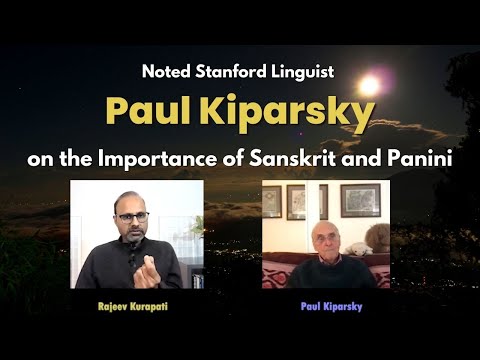
Why it is here: Paul Kiparsky (Stanford University). Interview with a leading Pāṇini scholar on the History and Philosophy of the Language Sciences podcast.
Why it is here: George Cardona (University of Pennsylvania). Lecture by one of the foremost living authorities on Pāṇini, author of standard reference works on the grammar.
Lead: The YouTube title gives his university as 'Pennsylvania University'; it is the University of Pennsylvania.
Why it is here: Mahamahopadhyaya Dr Korada Subrahmanyam. INDICA series opener: Pāṇini's Aṣṭādhyāyī as seen through Patañjali's Mahābhāṣya, by a retired professor of Sanskrit.
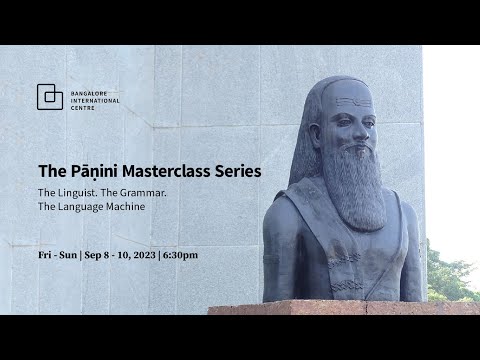
Why it is here: Prof. Saroja Bhate. Bangalore International Centre Pāṇini Masterclass 1: Pāṇini's life, his place in the history of linguistics and the form of his grammar.
Why it is here: Prof. Saroja Bhate. Bangalore International Centre Pāṇini Masterclass 2, 'The Perfect Grammarian': the principle of economy in the Pāṇinian system.
Why it is here: Paul Kiparsky (Stanford University), with Rajeev Kurapati. Long conversation with the Stanford linguist and Pāṇini scholar on Pāṇini's contribution to linguistics and how he came to study him.
Why it is here: Nityānanda Miśra. A scholar's response to the 2022 Rajpopat claim: neither hype nor dismiss it, wait for peer review. Pairs with the Cambridge video above.
Why it is here: Gérard Huet (Inria). Collège de France colloquium lecture of 18 October 2018, in French: from Pāṇini's grammar to Eilenberg machines, the finite-state models behind the Sanskrit Heritage segmenter.
Why it is here: Prof. Madhav Deshpande (University of Michigan, emeritus). NIAS Bengaluru lecture series, lecture 4 (10 February 2021): Pāṇini and the Indian linguistic tradition, by a professor emeritus of Sanskrit and linguistics.
Why it is here: Prof. Madhav Deshpande (University of Michigan, emeritus). NIAS Bengaluru lecture series, lecture 1 (20 January 2021): Indian traditions on the Vedas and Sanskrit.
Why it is here: Prof. Girish Nath Jha (JNU). Lecture of 21 August 2020 on Pāṇini and formal methods in linguistics, in a series co-organised by English for Nation.
Lead: The channel is the series organiser, not a university.
Why it is here: Prof. Malhar Kulkarni (IIT Bombay). Vijnana Bharati lockdown talk no. 33 (May 2020) on Pāṇini and the growth of language science in the world.
Why it is here: Peter Adamson and Jonardon Ganeri (History of Philosophy without any gaps). Episode 8 of the India series of the History of Philosophy without any gaps podcast: Pāṇini's grammar and its implications for philosophy of language.
Why it is here: Hariharnath (disciple of Gunderao Harkare). Demonstration of Gunderao Harkare's mechanical Pāṇini grammar machine at the 3rd ISCLS, University of Hyderabad, January 2009, posted by Amba Kulkarni.
Why it is here: Paul Kiparsky (Stanford), with John A. Goldsmith and John R. Ross. University of Chicago 'Lives in Linguistics' conversation with Paul Kiparsky, one of the leading modern interpreters of Pāṇini.
Lead: A career interview; Pāṇini is one topic among several.
Why it is here: Amba Kulkarni (University of Hyderabad). Lecture at EPHE Paris (31 May 2022) by the creator of the Saṃsādhanī toolkit, posted on her own channel.
Why it is here: Pawan Goyal (IIT Kharagpur). IIT Kharagpur researcher on a decade of Sanskrit segmentation, compound and parsing work; says plainly Sanskrit is not a programming language.
Why it is here: Sebastian Nehrdich and colleagues (7th ISCLS). Conference talk on Sanskrit machine translation and LLM-generated grammatical explanations.
Lead: Results as of early 2024; models have moved on.
Why it is here: Sebastian Nehrdich (UC Berkeley). Lecture on the Heidelberg – KRS channel about Dharmamitra, an open translation and search system for Buddhist Sanskrit, Pali, Tibetan and Chinese.
Why it is here: The Madras Sanskrit College; chief guest Smt. Nirmala Sitharaman. Official live webcast of the launch of the Sanskrit Heritage Model at the Madras Sanskrit College, 15 September 2026.
Lead: A ceremonial launch; no technical evaluation is shown.
Why it is here: Dr Sucheta Ghosh (Heidelberg University). IKS international seminar lecture, 'When Sanskrit Met AI: from Pāṇini to neuro-symbolic models', at RKSM Vivekananda Vidyabhavan.
Why it is here: Prof. Malhar Kulkarni (IIT Bombay). CFILT Lab (IIT Bombay) interview on moving from linguistic theory to systems, including the lab's Sanskrit WordNet.
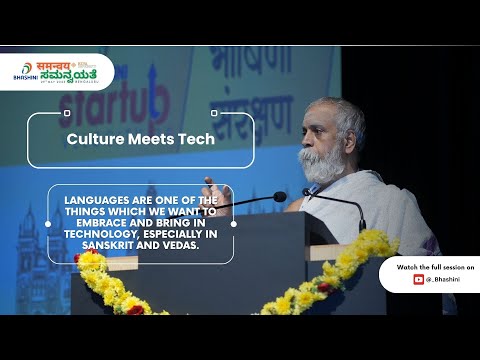
Why it is here: BHASHINI (Digital India Bhashini Division). Startup Sanatana session from BHASHINI's Samanvay outreach: Sanskrit, the Vedas, AI, NLP and digital preservation.
Lead: Outreach session; claims are the presenters'.
Why it is here: Prof. R B V Subrahmanyam (NIT Warangal). National Sanskrit University, Tirupati, session 3: LLMs for native and low-resource languages.
Why it is here: A PhD scholar from the Department of Sanskrit Studies, University of Hyderabad. BhashaLab session (14–15 December 2024) introducing Sanskrit computational linguistics, with a live demonstration of the Saṃsādhanī tools.
Lead: Student-level session; repeats the 'first programmer' metaphor.
Why it is here: Prof. Girish Nath Jha (JNU). FLAME University India Studies webinar: methodological congruence between Sanskrit grammar, linguistics and AI.
Why it is here: Jivnesh Sandhan. Presentation of SanskritShala, a neural Sanskrit NLP toolkit (segmentation, compounds, morphology, dependency parsing) built on earlier symbolic tools.
Why it is here: Prof. Girish Nath Jha (JNU; Chairman, CSTT). IIT Roorkee Sanskrit Club lecture (6 March 2023) on Sanskrit, linguistics and AI in multilingual India.
Why it is here: Prof. Amba Kulkarni (University of Hyderabad). EPHE Paris lecture (9 June 2022): how free Sanskrit word order really is, and the role of sannidhi (proximity) in verbal cognition.
Why it is here: Prof. Pawan Goyal (IIT Kharagpur) and Vasuki H A. Atharva Forum conversation on the IIT Kharagpur team's machine-learning work to make Sanskrit texts more accessible.
Why it is here: Prof. Pawan Goyal (IIT Kharagpur). Sanskritotsava 2021, day 2: Sanskrit and computational linguistics, chaired by Prof. Jayanta Mukhopadhyay.
Why it is here: Dr Malhar Kulkarni (IIT Bombay). 61st lecture in the centenary series of the SBL Centre of Sanskrit and Indological Studies, TMV, on Shabdamitra.
Why it is here: Dr Adriana Molina-Muñoz (University of Oxford). Cardamom Seminar, NUI Galway (26 April 2021): the challenges of building a Sanskrit corpus and studying Sanskrit syntax.
Why it is here: Gajendra Deshpande (SciPy India 2020). FOSSEE IIT Bombay recording of a SciPy India 2020 talk on natural language processing for Indic languages.
Why it is here: Dr Peter M. Scharf (Fellow, IIAS Shimla). IIAS Shimla presentation (15 April 2020): insights from Pāṇinian grammar and verbal cognition for language-neutral syntactic representation.
Why it is here: Prof. Amba Kulkarni (University of Hyderabad). ICIS 2019 (29 November 2019), part 3 of 5: Indian grammatical tradition and information technology. Part 2 is in her talks list below.
Why it is here: Prof. Amba Kulkarni (University of Hyderabad). ICIS 2019 (30 November 2019), part 4 of 5: Indian grammatical tradition and information technology.
Why it is here: Prof. Amba Kulkarni (University of Hyderabad). ICIS 2019 (30 November 2019), part 5 of 5: Indian grammatical tradition and information technology.
Why it is here: Prof. Amba Kulkarni (University of Hyderabad). ICIS 2019 (28 November 2019), part 1 of 5: Indian grammatical tradition and information technology.
Why it is here: Prof. Hema Murthy (IIT Madras). Lecture on building speech-synthesis systems for Indian languages, posted by the Institute of Mathematical Sciences channel.
Lead: Indian languages in general, not Sanskrit specifically.
ISCLS conference talks (6th and 7th symposia) · 32
Why it is here: Sanskrit Research Institute. Short film about the 7th ISCLS in Auroville (15–17 February 2024), with interviews of the scholars who took part.
Why it is here: Prasanna Venkatesh T S. Talk at the 7th International Sanskrit Computational Linguistics Symposium (ISCLS), Auroville, 15–17 February 2024, posted by the host Sanskrit Research Institute: contextual spellchecking for Sanskrit.
Why it is here: Prof. Kutumba Sastry. Talk at the 7th International Sanskrit Computational Linguistics Symposium (ISCLS), Auroville, 15–17 February 2024, posted by the host Sanskrit Research Institute: tātparya as a principle of hermeneutics.
Why it is here: Prof. Srinivasa Varakhedi. Talk at the 7th International Sanskrit Computational Linguistics Symposium (ISCLS), Auroville, 15–17 February 2024, posted by the host Sanskrit Research Institute: 'Hanumadavalokanam', a way forward for Sanskrit computational linguistics studies.
Why it is here: Ravi Panja and Ramana Arimilli (Svarupa). Talk at the 7th International Sanskrit Computational Linguistics Symposium (ISCLS), Auroville, 15–17 February 2024, posted by the host Sanskrit Research Institute: a content-management platform for Vedic Sanskrit scriptures.
Why it is here: Amruta Vilas Barbadikar and Amba Kulkarni. Talk at the 7th International Sanskrit Computational Linguistics Symposium (ISCLS), Auroville, 15–17 February 2024, posted by the host Sanskrit Research Institute: a computational tool to identify and classify anuprāsa (alliteration).
Why it is here: Sanjaya Singhal, Rahul Jain, Vijay Chandari and Rajshree Godawat. Talk at the 7th International Sanskrit Computational Linguistics Symposium (ISCLS), Auroville, 15–17 February 2024, posted by the host Sanskrit Research Institute: making a descriptive catalogue of Sanskrit manuscripts.
Why it is here: Sanjaya Singhal. Talk at the 7th International Sanskrit Computational Linguistics Symposium (ISCLS), Auroville, 15–17 February 2024, posted by the host Sanskrit Research Institute: making Sanskrit manuscripts available (sangrah.org).
Why it is here: Dilip H R. Talk at the 7th International Sanskrit Computational Linguistics Symposium (ISCLS), Auroville, 15–17 February 2024, posted by the host Sanskrit Research Institute: automatic detection and evaluation of varṇacitra.
Why it is here: Shankararama Sharma and Venkatasubramanian P. Talk at the 7th International Sanskrit Computational Linguistics Symposium (ISCLS), Auroville, 15–17 February 2024, posted by the host Sanskrit Research Institute: fostering learner engagement in Sanskrit e-learning.
Why it is here: Peter M. Scharf and Harsha Pamidipalli. Talk at the 7th International Sanskrit Computational Linguistics Symposium (ISCLS), Auroville, 15–17 February 2024, posted by the host Sanskrit Research Institute: the Śabdabrahman exercise platform.
Why it is here: Mārcis Gasūns. Talk at the 7th International Sanskrit Computational Linguistics Symposium (ISCLS), Auroville, 15–17 February 2024, posted by the host Sanskrit Research Institute: the future of the Cologne digital Sanskrit lexicons.
Why it is here: Arun K. Prasad. Talk at the 7th International Sanskrit Computational Linguistics Symposium (ISCLS), Auroville, 15–17 February 2024, posted by the host Sanskrit Research Institute: a fast prakriyā (derivation) generator that runs in the browser.
Why it is here: Soma Paul, Sukhada and others. Talk at the 7th International Sanskrit Computational Linguistics Symposium (ISCLS), Auroville, 15–17 February 2024, posted by the host Sanskrit Research Institute: a discourse-relation marking tool.
Why it is here: Hrishikesh Terdalkar and Arnab Bhattacharya. Talk at the 7th International Sanskrit Computational Linguistics Symposium (ISCLS), Auroville, 15–17 February 2024, posted by the host Sanskrit Research Institute: Vedapāṭhapaddhati, a tool to generate prakṛtipāṭha and vikṛtipāṭha forms.
Why it is here: Sriram Krishnan. Talk at the 7th International Sanskrit Computational Linguistics Symposium (ISCLS), Auroville, 15–17 February 2024, posted by the host Sanskrit Research Institute: a Sanskrit segmenter.
Why it is here: Anil Kumar, N Shailaja and Amba Kulkarni. Talk at the 7th International Sanskrit Computational Linguistics Symposium (ISCLS), Auroville, 15–17 February 2024, posted by the host Sanskrit Research Institute: START, a Sanskrit teaching, annotation and research tool.
Why it is here: Saee Vaze and Amba Kulkarni. Talk at the 7th International Sanskrit Computational Linguistics Symposium (ISCLS), Auroville, 15–17 February 2024, posted by the host Sanskrit Research Institute: inter-sentential discourse relations.
Why it is here: Ronit Kumar. Talk at the 7th International Sanskrit Computational Linguistics Symposium (ISCLS), Auroville, 15–17 February 2024, posted by the host Sanskrit Research Institute: a platform to study Sanskrit literature.
Why it is here: Tanuja P Ajotikar, Ketaki Kaduskar and Peter M. Scharf. Talk at the 7th International Sanskrit Computational Linguistics Symposium (ISCLS), Auroville, 15–17 February 2024, posted by the host Sanskrit Research Institute: TEI for digital editions with commentaries, using Kālidāsa's Raghuvaṃśa with Mallinātha's Sañjīvanī.
Why it is here: Satdeep Gill. Talk at the 7th International Sanskrit Computational Linguistics Symposium (ISCLS), Auroville, 15–17 February 2024, posted by the host Sanskrit Research Institute: Wikisource Loves Manuscripts.
Why it is here: Shivakumar G V (INDICA). Talk at the 7th International Sanskrit Computational Linguistics Symposium (ISCLS), Auroville, 15–17 February 2024, posted by the host Sanskrit Research Institute: presentation of INDICA's work.
Why it is here: Gérard Huet (Inria). Talk at the 7th International Sanskrit Computational Linguistics Symposium (ISCLS), Auroville, 15–17 February 2024, posted by the host Sanskrit Research Institute: colour-coding Sanskrit morphology in the Sanskrit Heritage reader.
Why it is here: Chaitanya S Lakkundi and Shivani V. Talk at the 7th International Sanskrit Computational Linguistics Symposium (ISCLS), Auroville, 15–17 February 2024, posted by the host Sanskrit Research Institute: Samskrit computational tools.
Why it is here: Martin Gluckman, Karin Preisendanz and Philipp Maas. Talk at the 7th International Sanskrit Computational Linguistics Symposium (ISCLS), Auroville, 15–17 February 2024, posted by the host Sanskrit Research Institute: South Asian manuscripts and unique documents.
Why it is here: A speaker at the 7th ISCLS. Talk at the 7th International Sanskrit Computational Linguistics Symposium (ISCLS), Auroville, 15–17 February 2024, posted by the host Sanskrit Research Institute: a non-Pāṇinian approach to Sanskrit morphonology.
Lead: The speaker is not named in the title or description.
Why it is here: Anagha Pradeep and others. Talk at the 7th International Sanskrit Computational Linguistics Symposium (ISCLS), Auroville, 15–17 February 2024, posted by the host Sanskrit Research Institute: context and word-sense errors in Google Translate's Sanskrit-to-English output of Bhagavadgītā verses.
Why it is here: Giacomo De Luca. Talk at the 7th International Sanskrit Computational Linguistics Symposium (ISCLS), Auroville, 15–17 February 2024, posted by the host Sanskrit Research Institute: Yoga Sūtra trees.
Why it is here: Swati Basapur and Shivani V. Talk at the 7th International Sanskrit Computational Linguistics Symposium (ISCLS), Auroville, 15–17 February 2024, posted by the host Sanskrit Research Institute: computational tools for Pāli.
Why it is here: Dhaval K Patel and Amba Kulkarni. Talk at the 7th International Sanskrit Computational Linguistics Symposium (ISCLS), Auroville, 15–17 February 2024, posted by the host Sanskrit Research Institute: word-sense alignment of Sanskrit lexica.
Why it is here: Dr Sampadananda Mishra. Talk at the 7th International Sanskrit Computational Linguistics Symposium (ISCLS), Auroville, 15–17 February 2024, posted by the host Sanskrit Research Institute: semantic analysis and knowledge representation in Sanskrit.
Why it is here: Martin Gluckman (Sanskrit Research Institute). Presentation at the 6th ISCLS, IIT Kharagpur, 23 October 2019, in the official IIT Kharagpur recording: recent digital Sanskrit work by SRI.
Digital Sanskrit: texts, manuscripts and tools · 11
Why it is here: Nicole Merkel-Hilf (Heidelberg University). Heidelberg KRS talk: automated text recognition (Transkribus) for Devanagari prints from the Naval Kishore Press collection.
Why it is here: Dr Sudha Gopalakrishnan (SAMHiTA, IIC). Heidelberg KRS talk on SAMHiTA, the India International Centre's South Asian Manuscript Histories and Textual Archive.
Why it is here: Prof. Yigal Bronner (Hebrew University of Jerusalem). Heidelberg KRS talk on Pandit, the prosopographical database of Indic texts, and the digital future of Indology.
Why it is here: Anna Fischer, Börge Kiss, Uta Reinöhl, Patrick Sahle and others. Presentation at the ADHO Digital Humanities conference on a collaborative research platform for Vedic Sanskrit texts (DH Graz).
Why it is here: Oliver Hellwig. Presentation at the Kyoto University 'Veda × Data Science' workshop (12 February 2021) by the creator of the Digital Corpus of Sanskrit.
Why it is here: Martin Gluckman (SRI), with Dr Raj Balkaran. New Books Network Indian Religions podcast, part 1 (20 October 2021): Sanskrit tools on the web.
Why it is here: Martin Gluckman (SRI), with Dr Raj Balkaran. New Books Network Indian Religions podcast, part 2 (21 October 2021): Sanskrit tools on the web.
Why it is here: Dr Shivendra Vikram Singh (ICSSR post-doctoral fellow, Panjab University). The Nachiketa Society talk on Bhartṛhari's view of language and thought, set against a recent Nature paper on the same question.
Why it is here: Dr Dipesh Katira and Dr Jayshree. Sangam Talks session linking Pāṇini's grammar and Bhartṛhari's Vākyapadīya with modern cognitive science.
Why it is here: Prof. Amba Kulkarni (University of Hyderabad). EPHE Paris lecture (2 June 2022): theories of śābdabodha (verbal cognition) and the parsing of Sanskrit texts.
Why it is here: Dr Peter M. Scharf (Fellow, IIAS Shimla). IIAS Shimla presentation (10 December 2020) on the structure of verbal cognition in Kauṇḍabhaṭṭa's Vaiyākaraṇabhūṣaṇasāra.
Why it is here: Peter Adamson and Jonardon Ganeri (History of Philosophy without any gaps). Episode 25 of the podcast's India series: Bhartṛhari on language.
Why it is here: Vidya-mitra (INFLIBNET e-PG Pathshala). Government e-PG Pathshala lecture on Bhartṛhari's Vākyapadīya (paper: Indian literary criticism and theory).
Why it is here: Vidya-mitra (INFLIBNET e-PG Pathshala). Government e-PG Pathshala lecture (M.A. Sanskrit): auxiliary causes of śābdabodha (verbal cognition).
Why it is here: Vidya-mitra (INFLIBNET e-PG Pathshala). Government e-PG Pathshala lecture (M.A. Sanskrit): the process of śābdabodha for the meaning of the verbal root.
Why it is here: Nikhilesh Ghushe (co-founder, AcquiredLang). IKS IIT Kanpur 'AI & IKS' session on Navya-Nyāya and vyākaraṇa in computer science and AI.
Lead: The speaker is a start-up founder, not an academic.
Why it is here: Nikhilesh Ghushe, Srinivas Jammalamadaka, Amritanshu Pandey and Raghava Krishna. Bṛhat 'Bodha' episode 28, 'From Nyāya to Neural Nets': Nyāya, Vaiśeṣika and Vyākaraṇa as frameworks for reasoning and meaning in machines.
Why it is here: Peter Adamson and Jonardon Ganeri (History of Philosophy without any gaps). Episode 21 of the podcast's India series: Mīmāṃsā on knowledge and language.
Why it is here: Prof. K. Ramasubramanian (IIT Bombay). Sangam Talks lecture on Gautama's Nyāya Sūtra: perception, inference, analogy and verbal testimony.
Why it is here: Prof. Arnab Bhattacharya (IIT Kanpur). IKS IIT Kanpur talk: the art and science of Sanskrit chandas, the origins of binary and combinatorics.
Why it is here: Prof. K. Ramasubramanian (IIT Bombay). Short Vande Mataram IIT Madras talk on the meru-prastāra (Pascal's triangle) in Piṅgala's Chandaḥśāstra.
Why it is here: UNESCO. UNESCO's own film on Vedic chanting, inscribed on the Representative List of the Intangible Cultural Heritage of Humanity (2008).
Why it is here: RKMVERI (Ramakrishna Mission Vivekananda Educational and Research Institute). University lecture course on the Samarthāhnika of Patañjali's Mahābhāṣya, the text that carries many of our story–grammar links.
Lead: Long classroom lecture; the speaker is not named in the title.
Why it is here: Dr Mani Dravid (Madras Sanskrit College). Lecture on the Aitareya Upaniṣad from the Madras Sanskrit College, a historic Sanskrit institution.
Lead: A traditional exposition; interpretive statements are the speaker's.
Why it is here: Swami Sarvapriyananda (Vedanta Society of New York), at IIT Kanpur. The most-viewed talk in this list: an IIT Kanpur lecture on the Māṇḍūkya Upaniṣad by a well-known Vedānta teacher.
Lead: A teaching talk from within the Advaita tradition, not an academic lecture.
Why it is here: Oliver Hellwig (University of Zurich). Lecture on the Heidelberg – KRS channel by the creator of the Digital Corpus of Sanskrit on computational dating of Vedic texts.
Lead: Dates are statistical estimates, with error margins.
Why it is here: Not named in the video description (SWAYAM PRABHA UG Sanskrit course, BA 2nd year). UGC/CEC SWAYAM PRABHA channel for UG Sanskrit: a degree-course lecture on the first paṭala of the Ṛgveda Prātiśākhya, the Vedic phonetics manual.
Lead: Small audience and the lecturer is not named in the description; treat as a lead for the course content, not a scholarly reference.
Why it is here: NPTEL course 'Mathematics in India' (IIT Bombay; Profs K. Ramasubramanian, M. D. Srinivas, M. S. Sriram). Government-funded NPTEL lecture on the Vedas and the Śulba Sūtras, part of a standard university course.
Lead: Which of the three professors speaks is not stated in the title.
Why it is here: NPTEL course 'Mathematics in India' (IIT Bombay). NPTEL lecture on Piṅgala's Chandaḥśāstra: metre, combinatorics and the meru-prastāra.
Lead: Popular claims that Piṅgala 'invented binary' go further than the lecture.
Why it is here: Prof. K. Ramasubramanian (IIT Bombay). IIT Gandhinagar lecture (7 April 2016) on Sanskrit as the carrier of India's knowledge traditions, especially mathematics and astronomy.
Why it is here: Swami Sarvapriyananda (Vedanta Society of New York). Talk at ICSR, IIT Madras, 5 November 2026: AI and consciousness, Vedānta, neuroscience and philosophy of mind.
Lead: A teaching talk within the Advaita tradition.
Why it is here: Prof. Prathosh A. P. (IISc), with Karthik Madathil. A conversation entirely in Sanskrit (English subtitles) on what LLMs do and whether AI can be conscious.
Why it is here: Swami Sarvapriyananda, Prof. Murray Shanahan and Dr Pinsent. Oxford Dharma Centre panel, 11 August 2026, Schwarzman Centre, University of Oxford: AI, consciousness and dharma ethics.
Why it is here: Martin Gluckman (Sanskrit Research Institute). Long-form interview with the founder of SRI and organising chair of the 7th ISCLS.
Introduction to Pāṇinian Grammar (NPTEL, IIT Bombay) · 59 videos
A complete 12-week, government-funded NPTEL course on Pāṇini's Aṣṭādhyāyī, from Pāṇini's linguistic background and the structure of the grammar to sandhi, compounds and Vedic accent. The course trailer and 58 lecture videos, in the order of the official playlist.
From the official NPTEL IIT Bombay channel (January 2022 course run), taught by Prof. Malhar Kulkarni. The topic shown for each lecture is taken from its official description. Open the YouTube playlist.
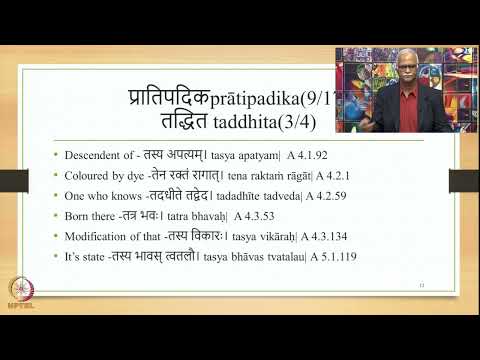
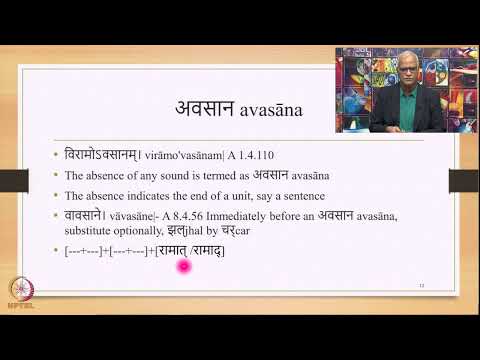
Why it is here: Prof. Malhar Kulkarni (IIT Bombay). NPTEL IIT Bombay course lecture: Scholars and texts in the Pāṇinian grammatical tradition (5th century BCE-18th Century CE) and their contribution.
Why it is here: Prof. Malhar Kulkarni (IIT Bombay). NPTEL IIT Bombay course lecture: Non-Pāṇinian grammatical traditions + Post 18th century CE scholars and texts in the Pāṇinian grammatical tradition.
Why it is here: Prof. Malhar Kulkarni (IIT Bombay). NPTEL IIT Bombay course lecture: Oral tradition + current trends of teaching and learning of Pāṇinian grammar.
Why it is here: Prof. Malhar Kulkarni (IIT Bombay). NPTEL IIT Bombay course lecture: Features of the Meta-Language of the Pāṇinian grammar; 1st Feature-Word as meaning.
Why it is here: Prof. Malhar Kulkarni (IIT Bombay). NPTEL IIT Bombay course lecture: 2nd feature of the Meta-Language of the Pāṇinian grammar: Meaning of cases in the Meta-Language of Pāṇinian grammar.
Why it is here: Prof. Malhar Kulkarni (IIT Bombay). NPTEL IIT Bombay course lecture: 3rd feature of the Meta-Language of the Pāṇinian grammar: the technique of Pratyāhāra; the explanation of the 14 sūtras.
Why it is here: Prof. Malhar Kulkarni (IIT Bombay). NPTEL IIT Bombay course lecture: 3rd feature of the Meta-Language of the Pāṇinian grammar: the technique of Pratyāhāra; Formation of Pratyāhāra.
Why it is here: Prof. Malhar Kulkarni (IIT Bombay). NPTEL IIT Bombay course lecture: 3rd feature of the Meta-Language of the Pāṇinian grammar: the technique of Pratyāhāra; Important Pratyāhāras, how asūtra is composed using the Pratyāhāra?.
Why it is here: Prof. Malhar Kulkarni (IIT Bombay). NPTEL IIT Bombay course lecture: Markers (इत्it) in the Meta-Language of the Pāṇinian grammar; A 1.3.2.
Why it is here: Prof. Malhar Kulkarni (IIT Bombay). NPTEL IIT Bombay course lecture: Markers (इत्it) in the Meta Language of Pāṇinian grammar: Consonant markers; A 1.3.3-4.
Why it is here: Prof. Malhar Kulkarni (IIT Bombay). NPTEL IIT Bombay course lecture: Markers (इत्it) in the Meta Language of Pāṇinian grammar: Consonant markers; A 1.3.5-6.
Why it is here: Prof. Malhar Kulkarni (IIT Bombay). NPTEL IIT Bombay course lecture: Markers (इत्it) in the Meta Language of Pāṇinian grammar: Consonant markers; A 1.3.7-8, A 1.3.9.
Why it is here: Prof. Malhar Kulkarni (IIT Bombay). NPTEL IIT Bombay course lecture: Markers (इत्it) and their functions in the Pāṇinian grammar(1+2/7).
Why it is here: Prof. Malhar Kulkarni (IIT Bombay). NPTEL IIT Bombay course lecture: Markers (इत्it) and their functions in the Pāṇinian grammar(3+4+5/7).
Why it is here: Prof. Malhar Kulkarni (IIT Bombay). NPTEL IIT Bombay course lecture: Markers (इत्it) and their functions in the Pāṇinian grammar (6+7/7).
Why it is here: Prof. Malhar Kulkarni (IIT Bombay). NPTEL IIT Bombay course lecture: Process of Speech Production: योग्यता yogyatā and आकाङ्क्षाākāṅkṣā; 1/8.
Why it is here: Prof. Malhar Kulkarni (IIT Bombay). NPTEL IIT Bombay course lecture: Process of Speech Production: अर्थाकाशarthākāśaand शब्दाकाशśabdākāśa; 1/8.
Why it is here: Prof. Malhar Kulkarni (IIT Bombay). NPTEL IIT Bombay course lecture: Process of speech production- Features of sounds-Individual-Vowels.
Why it is here: Prof. Malhar Kulkarni (IIT Bombay). NPTEL IIT Bombay course lecture: Process of speech production- Features of sounds-Individual-Consonants.
Why it is here: Prof. Malhar Kulkarni (IIT Bombay). NPTEL IIT Bombay course lecture: Process of speech production- Features of sounds-Individual-Class Consonants.
Why it is here: Prof. Malhar Kulkarni (IIT Bombay). NPTEL IIT Bombay course lecture: Process of speech production- Functions of features of sounds:सवर्णsavarṇa.
Why it is here: Prof. Malhar Kulkarni (IIT Bombay). NPTEL IIT Bombay course lecture: Process of speech production- Functions of features of sounds: Criteria for substitution.
Why it is here: Prof. Malhar Kulkarni (IIT Bombay). NPTEL IIT Bombay course lecture: संज्ञासूत्रs saṁjñāsūtras: Technical terms-4; 6 कारकskārakas in the अष्टाध्यायीAṣṭādhyāyī order.
Why it is here: Prof. Malhar Kulkarni (IIT Bombay). NPTEL IIT Bombay course lecture: संज्ञासूत्रs saṁjñāsūtras: Technical terms-5; कारकkāraka&विभक्तिvibhakti: Post 18th century explanation.
Why it is here: Prof. Malhar Kulkarni (IIT Bombay). NPTEL IIT Bombay course lecture: संज्ञासूत्रs saṁjñāsūtras: Technical terms-7; कारकkāraka&विभक्तिvibhakti: अभिधानabhidhāna by कृत्kṛt, तद्धितtaddhita and समासsamāsa.
Why it is here: Prof. Malhar Kulkarni (IIT Bombay). NPTEL IIT Bombay course lecture: Derivation of स्वरsvara-accent in Pāṇinian grammar.
Talks by Prof. Amba Kulkarni on Sanskrit computational linguistics · 15 talks
Prof. Amba Kulkarni of the University of Hyderabad, creator of the Saṃsādhanī toolkit, keeps her own YouTube list of her talks on Sanskrit computational linguistics. These are the public, embeddable ones, recorded at universities and institutes in India and abroad.
Order and selection follow her playlist 'Talks by Amba Kulkarni on Sanskrit Computational linguistics and related topics'; four entries that do not allow embedding are left out. Each video is credited to the channel that posted it. Open the YouTube playlist.
Why it is here: Plenary session at IIT Roorkee (18 August 2025). IIT Roorkee plenary session on Sanskrit and AI: computational tools for India's languages, culture and heritage.
Why it is here: Prof. Amba Kulkarni (University of Hyderabad). Vivekananda International Foundation seminar (3–4 March 2020): Indian grammatical theories from a computational perspective.
Why it is here: Prof. Amba Kulkarni (University of Hyderabad). NIAS Bengaluru lecture 10 (7 April 2021): Pāṇini's Aṣṭādhyāyī from a computational perspective.
Why it is here: Prof. Amba Kulkarni (University of Hyderabad). ICIS 2019 (29 November 2019), part 2 of 5: Indian grammatical tradition and information technology. The other parts are in Sanskrit computing above.
Why it is here: Prof. Amba Kulkarni and other speakers. Linguistics session at the Bharatiya Vigyan Sammelan 2017, with Dr Amba Kulkarni's theme speech.
Why it is here: Prof. Amba Kulkarni (University of Hyderabad). Lecture in the Sanskrit Academy, Osmania University, 30-day Sanskrit course (August–September 2018).
Why it is here: Prof. Amba Kulkarni (University of Hyderabad). Sanskrit Academy, Osmania University, 10-day workshop on Sanskrit computational linguistics (25 July–4 August 2018): an introduction.
Why it is here: Prof. Amba Kulkarni (University of Hyderabad). INDICA conversation (31 March 2023) on building Saṃsādhanī, the University of Hyderabad's Sanskrit computational toolkit.
Why it is here: Prof. Amba Kulkarni (University of Hyderabad). Vyoma Upanyāsa Mālikā lecture (16 October 2022): research opportunities in Sanskrit computational linguistics.
Why it is here: Prof. Amba Kulkarni (University of Hyderabad). EPHE Paris lecture (16 June 2022): recursion and combinatorial mathematics in Piṅgala's Chandaḥśāstra.
Saṃsādhanī: Praveśikā (IIT Roorkee Sanskrit Club and University of Hyderabad) · 22 lectures
A hands-on online course in the University of Hyderabad's Saṃsādhanī Sanskrit tools: morphological analysis and generation, sandhi, sentence analysis, the segmenter and kāraka–vibhakti mapping, ending with a project.
From the IIT Roorkee Sanskrit Club channel. The two course playlists (the club's and Prof. Amba Kulkarni's copy) are merged, each lecture listed once, in lecture order. Open the YouTube playlist.
Why it is here: Team Saṃsādhanī, University of Hyderabad, with the IIT Roorkee Sanskrit Club. Lecture 01: Introduction to Samsaadhanii, Inaugural Session of Samsaadhanii : Praveshika. Online course on the Saṃsādhanī tools, run by the IIT Roorkee Sanskrit Club with Team Saṃsādhanī, University of Hyderabad, from 15 February 2021.
Why it is here: Team Saṃsādhanī, University of Hyderabad, with the IIT Roorkee Sanskrit Club. Lecture 02: Morph Analyzer. Online course on the Saṃsādhanī tools, run by the IIT Roorkee Sanskrit Club with Team Saṃsādhanī, University of Hyderabad, from 15 February 2021.
Why it is here: Team Saṃsādhanī, University of Hyderabad, with the IIT Roorkee Sanskrit Club. Lecture 03: Morph Generator - Part 1. Online course on the Saṃsādhanī tools, run by the IIT Roorkee Sanskrit Club with Team Saṃsādhanī, University of Hyderabad, from 15 February 2021.
Why it is here: Team Saṃsādhanī, University of Hyderabad, with the IIT Roorkee Sanskrit Club. Lecture 04: Morph Generator - Part 2. Online course on the Saṃsādhanī tools, run by the IIT Roorkee Sanskrit Club with Team Saṃsādhanī, University of Hyderabad, from 15 February 2021.
Why it is here: Team Saṃsādhanī, University of Hyderabad, with the IIT Roorkee Sanskrit Club. Lecture 05: Morph Abhyāsa. Online course on the Saṃsādhanī tools, run by the IIT Roorkee Sanskrit Club with Team Saṃsādhanī, University of Hyderabad, from 15 February 2021.
Why it is here: Team Saṃsādhanī, University of Hyderabad, with the IIT Roorkee Sanskrit Club. Lecture 06: Sandhi (practical). Online course on the Saṃsādhanī tools, run by the IIT Roorkee Sanskrit Club with Team Saṃsādhanī, University of Hyderabad, from 15 February 2021.
Why it is here: Team Saṃsādhanī, University of Hyderabad, with the IIT Roorkee Sanskrit Club. Lecture 07: Sandhi - Part 2. Online course on the Saṃsādhanī tools, run by the IIT Roorkee Sanskrit Club with Team Saṃsādhanī, University of Hyderabad, from 15 February 2021.
Why it is here: Team Saṃsādhanī, University of Hyderabad, with the IIT Roorkee Sanskrit Club. Lecture 08: Sandhi Revision. Online course on the Saṃsādhanī tools, run by the IIT Roorkee Sanskrit Club with Team Saṃsādhanī, University of Hyderabad, from 15 February 2021.
Why it is here: Team Saṃsādhanī, University of Hyderabad, with the IIT Roorkee Sanskrit Club. Lecture 09: Revision 2. Online course on the Saṃsādhanī tools, run by the IIT Roorkee Sanskrit Club with Team Saṃsādhanī, University of Hyderabad, from 15 February 2021.
Why it is here: Team Saṃsādhanī, University of Hyderabad, with the IIT Roorkee Sanskrit Club. Lecture 10: vaakya-vishleshaNam (Sentence Analysis) - Part 1. Online course on the Saṃsādhanī tools, run by the IIT Roorkee Sanskrit Club with Team Saṃsādhanī, University of Hyderabad, from 15 February 2021.
Why it is here: Team Saṃsādhanī, University of Hyderabad, with the IIT Roorkee Sanskrit Club. Lecture 11: vaakya-vishleshaNam (Sentence Analysis) - Part 2. Online course on the Saṃsādhanī tools, run by the IIT Roorkee Sanskrit Club with Team Saṃsādhanī, University of Hyderabad, from 15 February 2021.
Why it is here: Team Saṃsādhanī, University of Hyderabad, with the IIT Roorkee Sanskrit Club. Lecture 12 (no topic given in the title). Online course on the Saṃsādhanī tools, run by the IIT Roorkee Sanskrit Club with Team Saṃsādhanī, University of Hyderabad, from 15 February 2021.
Why it is here: Team Saṃsādhanī, University of Hyderabad, with the IIT Roorkee Sanskrit Club. Lecture 13 (no topic given in the title). Online course on the Saṃsādhanī tools, run by the IIT Roorkee Sanskrit Club with Team Saṃsādhanī, University of Hyderabad, from 15 February 2021.
Why it is here: Team Saṃsādhanī, University of Hyderabad, with the IIT Roorkee Sanskrit Club. Lecture 14 (no topic given in the title). Online course on the Saṃsādhanī tools, run by the IIT Roorkee Sanskrit Club with Team Saṃsādhanī, University of Hyderabad, from 15 February 2021.
Why it is here: Team Saṃsādhanī, University of Hyderabad, with the IIT Roorkee Sanskrit Club. Lecture 15: Segmenter. Online course on the Saṃsādhanī tools, run by the IIT Roorkee Sanskrit Club with Team Saṃsādhanī, University of Hyderabad, from 15 February 2021.
Why it is here: Team Saṃsādhanī, University of Hyderabad, with the IIT Roorkee Sanskrit Club. Lecture 16: Segmenter. Online course on the Saṃsādhanī tools, run by the IIT Roorkee Sanskrit Club with Team Saṃsādhanī, University of Hyderabad, from 15 February 2021.
Why it is here: Team Saṃsādhanī, University of Hyderabad, with the IIT Roorkee Sanskrit Club. Lecture 17: Kaaraka Relations and Vibhakti Mapping. Online course on the Saṃsādhanī tools, run by the IIT Roorkee Sanskrit Club with Team Saṃsādhanī, University of Hyderabad, from 15 February 2021.
Why it is here: Team Saṃsādhanī, University of Hyderabad, with the IIT Roorkee Sanskrit Club. Lecture 18: Kaaraka Relations and Vibhakti Mapping. Online course on the Saṃsādhanī tools, run by the IIT Roorkee Sanskrit Club with Team Saṃsādhanī, University of Hyderabad, from 15 February 2021.
Why it is here: Team Saṃsādhanī, University of Hyderabad, with the IIT Roorkee Sanskrit Club. Lecture 19: Kaaraka Relations and Vibhakti Mapping. Online course on the Saṃsādhanī tools, run by the IIT Roorkee Sanskrit Club with Team Saṃsādhanī, University of Hyderabad, from 15 February 2021.
Why it is here: Team Saṃsādhanī, University of Hyderabad, with the IIT Roorkee Sanskrit Club. Lecture 20: Kaaraka Relations and Vibhakti Mapping. Online course on the Saṃsādhanī tools, run by the IIT Roorkee Sanskrit Club with Team Saṃsādhanī, University of Hyderabad, from 15 February 2021.
Why it is here: Team Saṃsādhanī, University of Hyderabad, with the IIT Roorkee Sanskrit Club. Demo, Project. Online course on the Saṃsādhanī tools, run by the IIT Roorkee Sanskrit Club with Team Saṃsādhanī, University of Hyderabad, from 15 February 2021.
Why it is here: Team Saṃsādhanī, University of Hyderabad, with the IIT Roorkee Sanskrit Club. Project Instructions: Error Report and Correction. Online course on the Saṃsādhanī tools, run by the IIT Roorkee Sanskrit Club with Team Saṃsādhanī, University of Hyderabad, from 15 February 2021.
Online Computational Sanskrit Workshop (JNU and University of Delhi, 2020) · 21 sessions
A seven-day workshop run by Jawaharlal Nehru University and the University of Delhi: computational Sanskrit, Pāṇini, fonts and standards, digitisation, speech technology, corpora and machine learning, annotation, machine translation, OCR, summarisation and programming for Sanskrit.
From the COLING at JNU channel. The substantive sessions are listed; short welcome, vote-of-thanks and chairs' remarks are left out. Open the YouTube playlist.
Why it is here: Prof Girish Nath Jha. 7-day Online Computational Sanskrit Workshop, organised by JNU and the University of Delhi, 27 May–2 June 2020: Prof Girish Nath Jha on "Computational Linguistics and Sanskrit".
Why it is here: Dr Subhash Chandra. 7-day Online Computational Sanskrit Workshop, organised by JNU and the University of Delhi, 27 May–2 June 2020: Dr Subhash Chandra from Delhi University speaking on Survey of R&D in Computational Sanskrit.
Why it is here: Shiladitya Bhattacahrya & Girish Nath Jha. 7-day Online Computational Sanskrit Workshop, organised by JNU and the University of Delhi, 27 May–2 June 2020: Shiladitya Bhattacahrya & Prof Girish Nath Jha on Panini and formal linguistic methods.
Why it is here: Dr Sudhir Kumar Mishra. 7-day Online Computational Sanskrit Workshop, organised by JNU and the University of Delhi, 27 May–2 June 2020: Dr Sudhir Kumar Mishra on fonts & standards.
Why it is here: Ram Kishore. 7-day Online Computational Sanskrit Workshop, organised by JNU and the University of Delhi, 27 May–2 June 2020: Ram Kishore on Baraha editor.
Why it is here: Dr Subhash Chandra and Shagun Sinha. 7-day Online Computational Sanskrit Workshop, organised by JNU and the University of Delhi, 27 May–2 June 2020: Dr Subhash Chandra and Shagun Sinha on HTML CSS.
Why it is here: Devendra Singh Rajput. 7-day Online Computational Sanskrit Workshop, organised by JNU and the University of Delhi, 27 May–2 June 2020: Devendra Singh Rajput on Text Digitization and search.
Why it is here: Diwakar Mishra. 7-day Online Computational Sanskrit Workshop, organised by JNU and the University of Delhi, 27 May–2 June 2020: Diwakar Mishra on "Speech Technologies".
Why it is here: Prof Girish Nath Jha. 7-day Online Computational Sanskrit Workshop, organised by JNU and the University of Delhi, 27 May–2 June 2020: Prof Girish Nath Jha on "Corpora and Machine Learning".
Why it is here: Prof Girish Nath Jha. 7-day Online Computational Sanskrit Workshop, organised by JNU and the University of Delhi, 27 May–2 June 2020: Prof Girish Nath Jha on "Sanskrit and digital modes of Education".
Why it is here: Dr Sachin Kumar. 7-day Online Computational Sanskrit Workshop, organised by JNU and the University of Delhi, 27 May–2 June 2020: Dr Sachin Kumar from ezData Intelligence on "Text annotation and NER".
Why it is here: Dr Atul Ojha & Sachin Kumar. 7-day Online Computational Sanskrit Workshop, organised by JNU and the University of Delhi, 27 May–2 June 2020: Dr Atul Ojha & Sachin Kumar on "CRF & SVM algorithms".
Why it is here: Dr Atul Kumar Ojha. 7-day Online Computational Sanskrit Workshop, organised by JNU and the University of Delhi, 27 May–2 June 2020: Dr Atul Kumar Ojha, Post Doctoral Fellow at Charles University, Prague on "Machine Translation".
Why it is here: Ram Kishor. 7-day Online Computational Sanskrit Workshop, organised by JNU and the University of Delhi, 27 May–2 June 2020: Ram Kishor on "Machine Translation".
Why it is here: Prof Girish Nath Jha and Kabi Khanganba. 7-day Online Computational Sanskrit Workshop, organised by JNU and the University of Delhi, 27 May–2 June 2020: Prof Girish Nath Jha and Kabi Khanganba on "OCR and related technologies".
Why it is here: Shagun Sinha. 7-day Online Computational Sanskrit Workshop, organised by JNU and the University of Delhi, 27 May–2 June 2020: Shagun Sinha on "Text Summarization".
Why it is here: Prof Girish Nath Jha. 7-day Online Computational Sanskrit Workshop, organised by JNU and the University of Delhi, 27 May–2 June 2020: Prof Girish Nath Jha on Java programming.
Why it is here: Kabi Khanganba. 7-day Online Computational Sanskrit Workshop, organised by JNU and the University of Delhi, 27 May–2 June 2020: Kabi Khanganba on Sanskrit-Java interface.
Why it is here: Dr Subhash Chandra. 7-day Online Computational Sanskrit Workshop, organised by JNU and the University of Delhi, 27 May–2 June 2020: Dr Subhash Chandra from Delhi University on Python Programming.
Why it is here: Shri Chamu Krishna Shastry. 7-day Online Computational Sanskrit Workshop, organised by JNU and the University of Delhi, 27 May–2 June 2020: Valedictory Keynote- speech by Shri Chamu Krishna Shastry, Secretary, Sanskrit Promotion Foundation.
Why it is here: Prof Srinivasa Varakhedi. 7-day Online Computational Sanskrit Workshop, organised by JNU and the University of Delhi, 27 May–2 June 2020: Chief Guest Speech in the Valedictory Session by Prof Srinivas Varakhedi, VIce Chancellor, Kavi Kulguru Sanskrit University, Ramtek.
Mathematics in India: From Vedic Period to Modern Times (NPTEL) · 37 lectures
The NPTEL course on the Indian mathematical tradition in Sanskrit sources: Pāṇini, Piṅgala, the decimal place-value system, Āryabhaṭa, Brahmagupta, Mahāvīra, combinatorics, Bhāskarācārya, Nārāyaṇa Paṇḍita, magic squares, the Kerala work on calculus and trigonometry, and proofs.
From the official nptelhrd channel. Lectures 2, 3 and 5 (Śulba sūtras and Piṅgala) are in the Śulba theme above, with their study-note slides, so this list has the other 37. Open the YouTube playlist.
Why it is here: Profs M. D. Srinivas, M. S. Sriram and K. Ramasubramanian. NPTEL lecture on Indian Mathematics: An Overview, from the course by Profs M. D. Srinivas, M. S. Sriram and K. Ramasubramanian (IIT Bombay).
Why it is here: Profs M. D. Srinivas, M. S. Sriram and K. Ramasubramanian. NPTEL lecture on Panini's Astadhyayi, from the course by Profs M. D. Srinivas, M. S. Sriram and K. Ramasubramanian (IIT Bombay).
Why it is here: Profs M. D. Srinivas, M. S. Sriram and K. Ramasubramanian. NPTEL lecture on Decimal place value system, from the course by Profs M. D. Srinivas, M. S. Sriram and K. Ramasubramanian (IIT Bombay).
Why it is here: Profs M. D. Srinivas, M. S. Sriram and K. Ramasubramanian. NPTEL lecture on Aryabhatıya of Aryabhata - Part 1, from the course by Profs M. D. Srinivas, M. S. Sriram and K. Ramasubramanian (IIT Bombay).
Why it is here: Profs M. D. Srinivas, M. S. Sriram and K. Ramasubramanian. NPTEL lecture on Aryabhatıya of Aryabhata - Part 2, from the course by Profs M. D. Srinivas, M. S. Sriram and K. Ramasubramanian (IIT Bombay).
Why it is here: Profs M. D. Srinivas, M. S. Sriram and K. Ramasubramanian. NPTEL lecture on Aryabhatıya of Aryabhata - Part 3, from the course by Profs M. D. Srinivas, M. S. Sriram and K. Ramasubramanian (IIT Bombay).
Why it is here: Profs M. D. Srinivas, M. S. Sriram and K. Ramasubramanian. NPTEL lecture on Aryabhatıya of Aryabhata - Part 4 and Introduction to Jaina Mathematics, from the course by Profs M. D. Srinivas, M. S. Sriram and K. Ramasubramanian (IIT Bombay).
Why it is here: Profs M. D. Srinivas, M. S. Sriram and K. Ramasubramanian. NPTEL lecture on Brahmasphutasiddhanta of Brahmagupta - Part 1, from the course by Profs M. D. Srinivas, M. S. Sriram and K. Ramasubramanian (IIT Bombay).
Why it is here: Profs M. D. Srinivas, M. S. Sriram and K. Ramasubramanian. NPTEL lecture on Brahmasphutasiddhanta of Brahmagupta - Part 2, from the course by Profs M. D. Srinivas, M. S. Sriram and K. Ramasubramanian (IIT Bombay).
Why it is here: Profs M. D. Srinivas, M. S. Sriram and K. Ramasubramanian. NPTEL lecture on Brahmasphutasiddhanta of Brahmagupta - Part 3, from the course by Profs M. D. Srinivas, M. S. Sriram and K. Ramasubramanian (IIT Bombay).
Why it is here: Profs M. D. Srinivas, M. S. Sriram and K. Ramasubramanian. NPTEL lecture on Brahmasphutasiddhanta of Brahmagupta - Part 4 and The BakhshalıManuscript, from the course by Profs M. D. Srinivas, M. S. Sriram and K. Ramasubramanian (IIT Bombay).
Why it is here: Profs M. D. Srinivas, M. S. Sriram and K. Ramasubramanian. NPTEL lecture on Mahaviras Ganitasarasangraha, from the course by Profs M. D. Srinivas, M. S. Sriram and K. Ramasubramanian (IIT Bombay).
Why it is here: Profs M. D. Srinivas, M. S. Sriram and K. Ramasubramanian. NPTEL lecture on Mahaviras Ganitasarasangraha 2, from the course by Profs M. D. Srinivas, M. S. Sriram and K. Ramasubramanian (IIT Bombay).
Why it is here: Profs M. D. Srinivas, M. S. Sriram and K. Ramasubramanian. NPTEL lecture on Mahavıra's Ganitasarasangraha 3, from the course by Profs M. D. Srinivas, M. S. Sriram and K. Ramasubramanian (IIT Bombay).
Why it is here: Profs M. D. Srinivas, M. S. Sriram and K. Ramasubramanian. NPTEL lecture on Development of Combinatorics 1, from the course by Profs M. D. Srinivas, M. S. Sriram and K. Ramasubramanian (IIT Bombay).
Why it is here: Profs M. D. Srinivas, M. S. Sriram and K. Ramasubramanian. NPTEL lecture on Development of Combinatorics 2, from the course by Profs M. D. Srinivas, M. S. Sriram and K. Ramasubramanian (IIT Bombay).
Why it is here: Profs M. D. Srinivas, M. S. Sriram and K. Ramasubramanian. NPTEL lecture on Lılavatı of Bhaskaracarya I, from the course by Profs M. D. Srinivas, M. S. Sriram and K. Ramasubramanian (IIT Bombay).
Why it is here: Profs M. D. Srinivas, M. S. Sriram and K. Ramasubramanian. NPTEL lecture on Lılavatı of Bhaskaracarya 2, from the course by Profs M. D. Srinivas, M. S. Sriram and K. Ramasubramanian (IIT Bombay).
Why it is here: Profs M. D. Srinivas, M. S. Sriram and K. Ramasubramanian. NPTEL lecture on Lılavatı of Bhaskaracarya 3, from the course by Profs M. D. Srinivas, M. S. Sriram and K. Ramasubramanian (IIT Bombay).
Why it is here: Profs M. D. Srinivas, M. S. Sriram and K. Ramasubramanian. NPTEL lecture on Bijaganita of Bhaskaracarya 1, from the course by Profs M. D. Srinivas, M. S. Sriram and K. Ramasubramanian (IIT Bombay).
Why it is here: Profs M. D. Srinivas, M. S. Sriram and K. Ramasubramanian. NPTEL lecture on Bijaganita of Bhaskaracarya 2, from the course by Profs M. D. Srinivas, M. S. Sriram and K. Ramasubramanian (IIT Bombay).
Why it is here: Profs M. D. Srinivas, M. S. Sriram and K. Ramasubramanian. NPTEL lecture on Ganitakaumudi of Narayana Pandita 1, from the course by Profs M. D. Srinivas, M. S. Sriram and K. Ramasubramanian (IIT Bombay).
Why it is here: Profs M. D. Srinivas, M. S. Sriram and K. Ramasubramanian. NPTEL lecture on Ganitakaumudi of Narayana Pandita 2, from the course by Profs M. D. Srinivas, M. S. Sriram and K. Ramasubramanian (IIT Bombay).
Why it is here: Profs M. D. Srinivas, M. S. Sriram and K. Ramasubramanian. NPTEL lecture on Ganitakaumudi of Narayana Pandita 3, from the course by Profs M. D. Srinivas, M. S. Sriram and K. Ramasubramanian (IIT Bombay).
Why it is here: Profs M. D. Srinivas, M. S. Sriram and K. Ramasubramanian. NPTEL lecture on Magic Squares - Part 1, from the course by Profs M. D. Srinivas, M. S. Sriram and K. Ramasubramanian (IIT Bombay).
Why it is here: Profs M. D. Srinivas, M. S. Sriram and K. Ramasubramanian. NPTEL lecture on Magic Squares - Part 2, from the course by Profs M. D. Srinivas, M. S. Sriram and K. Ramasubramanian (IIT Bombay).
Why it is here: Profs M. D. Srinivas, M. S. Sriram and K. Ramasubramanian. NPTEL lecture on Development of Calculus in India 1, from the course by Profs M. D. Srinivas, M. S. Sriram and K. Ramasubramanian (IIT Bombay).
Why it is here: Profs M. D. Srinivas, M. S. Sriram and K. Ramasubramanian. NPTEL lecture on Development of Calculus in India 2, from the course by Profs M. D. Srinivas, M. S. Sriram and K. Ramasubramanian (IIT Bombay).
Why it is here: Profs M. D. Srinivas, M. S. Sriram and K. Ramasubramanian. NPTEL lecture on Jyanayanam: Computation of Rsines, from the course by Profs M. D. Srinivas, M. S. Sriram and K. Ramasubramanian (IIT Bombay).
Why it is here: Profs M. D. Srinivas, M. S. Sriram and K. Ramasubramanian. NPTEL lecture on Trigonometry and Spherical Trigonometry 1, from the course by Profs M. D. Srinivas, M. S. Sriram and K. Ramasubramanian (IIT Bombay).
Why it is here: Profs M. D. Srinivas, M. S. Sriram and K. Ramasubramanian. NPTEL lecture on Trigonometry and Spherical Trigonometry 2, from the course by Profs M. D. Srinivas, M. S. Sriram and K. Ramasubramanian (IIT Bombay).
Why it is here: Profs M. D. Srinivas, M. S. Sriram and K. Ramasubramanian. NPTEL lecture on Trigonometry and Spherical Trigonometry 3, from the course by Profs M. D. Srinivas, M. S. Sriram and K. Ramasubramanian (IIT Bombay).
Why it is here: Profs M. D. Srinivas, M. S. Sriram and K. Ramasubramanian. NPTEL lecture on Proofs in Indian Mathematics 1, from the course by Profs M. D. Srinivas, M. S. Sriram and K. Ramasubramanian (IIT Bombay).
Why it is here: Profs M. D. Srinivas, M. S. Sriram and K. Ramasubramanian. NPTEL lecture on Proofs in Indian Mathematics - Part 2, from the course by Profs M. D. Srinivas, M. S. Sriram and K. Ramasubramanian (IIT Bombay).
Why it is here: Profs M. D. Srinivas, M. S. Sriram and K. Ramasubramanian. NPTEL lecture on Proofs in Indian Mathematics 3, from the course by Profs M. D. Srinivas, M. S. Sriram and K. Ramasubramanian (IIT Bombay).
Why it is here: Profs M. D. Srinivas, M. S. Sriram and K. Ramasubramanian. NPTEL lecture on Mathematics in Modern India 1, from the course by Profs M. D. Srinivas, M. S. Sriram and K. Ramasubramanian (IIT Bombay).
Why it is here: Profs M. D. Srinivas, M. S. Sriram and K. Ramasubramanian. NPTEL lecture on Mathematics in Modern India 2, from the course by Profs M. D. Srinivas, M. S. Sriram and K. Ramasubramanian (IIT Bombay).
Indian Philosophy: Nyāya and Mīmāṃsā lectures (NPTEL, IIT Madras) · 15 lectures
The introduction and the complete Nyāya (logic and epistemology) and Mīmāṃsā (Vedic hermeneutics) modules of the NPTEL course Indian Philosophy.
From the official nptelhrd channel; lecturer Dr Satya Sundar Sethy, Department of Humanities and Social Sciences, IIT Madras. The other modules of the course are outside this journal's scope. Open the YouTube playlist.
Why it is here: Dr Satya Sundar Sethy (IIT Madras). NPTEL lecture: Introduction to Indian Philosophy, from the course Indian Philosophy by Dr Satya Sundar Sethy, IIT Madras.
Why it is here: Dr Satya Sundar Sethy (IIT Madras). NPTEL lecture: The Nyaya Philosophy - I, from the course Indian Philosophy by Dr Satya Sundar Sethy, IIT Madras.
Why it is here: Dr Satya Sundar Sethy (IIT Madras). NPTEL lecture: The Nyaya Philosophy - II, from the course Indian Philosophy by Dr Satya Sundar Sethy, IIT Madras.
Why it is here: Dr Satya Sundar Sethy (IIT Madras). NPTEL lecture: The Nyaya Philosophy - III, from the course Indian Philosophy by Dr Satya Sundar Sethy, IIT Madras.
Why it is here: Dr Satya Sundar Sethy (IIT Madras). NPTEL lecture: The Nyaya Philosophy - IV, from the course Indian Philosophy by Dr Satya Sundar Sethy, IIT Madras.
Why it is here: Dr Satya Sundar Sethy (IIT Madras). NPTEL lecture: The Nyaya Philosophy - V, from the course Indian Philosophy by Dr Satya Sundar Sethy, IIT Madras.
Why it is here: Dr Satya Sundar Sethy (IIT Madras). NPTEL lecture: The Nyaya Philosophy - VI, from the course Indian Philosophy by Dr Satya Sundar Sethy, IIT Madras.
Why it is here: Dr Satya Sundar Sethy (IIT Madras). NPTEL lecture: The Nyaya Philosophy - VII, from the course Indian Philosophy by Dr Satya Sundar Sethy, IIT Madras.
Why it is here: Dr Satya Sundar Sethy (IIT Madras). NPTEL lecture: The Nyaya Philosophy - VIII, from the course Indian Philosophy by Dr Satya Sundar Sethy, IIT Madras.
Why it is here: Dr Satya Sundar Sethy (IIT Madras). NPTEL lecture: The Nyaya Philosophy - IX, from the course Indian Philosophy by Dr Satya Sundar Sethy, IIT Madras.
Why it is here: Dr Satya Sundar Sethy (IIT Madras). NPTEL lecture: The Mimamsa Philosophy - I, from the course Indian Philosophy by Dr Satya Sundar Sethy, IIT Madras.
Why it is here: Dr Satya Sundar Sethy (IIT Madras). NPTEL lecture: The Mimamsa Philosophy - II, from the course Indian Philosophy by Dr Satya Sundar Sethy, IIT Madras.
Why it is here: Dr Satya Sundar Sethy (IIT Madras). NPTEL lecture: The Mimamsa Philosophy - III, from the course Indian Philosophy by Dr Satya Sundar Sethy, IIT Madras.
Why it is here: Dr Satya Sundar Sethy (IIT Madras). NPTEL lecture: The Mimamsa Philosophy - IV, from the course Indian Philosophy by Dr Satya Sundar Sethy, IIT Madras.
Why it is here: Dr Satya Sundar Sethy (IIT Madras). NPTEL lecture: The Mimamsa Philosophy - V, from the course Indian Philosophy by Dr Satya Sundar Sethy, IIT Madras.
Mathematics in Piṅgala's Chandaḥsūtra (RKMRC) · 8 parts
An eight-part lecture series on the mathematics in Piṅgala's Chandaḥsūtra, from Ramakrishna Mission Residential College, Narendrapur.
From the college's official channel, sorted by part number. The lecturer is not named in the titles or descriptions. Open the YouTube playlist.
Why it is here: Ramakrishna Mission Residential College, Narendrapur. Part 1 of the college's lecture series on the mathematics of Piṅgala's Chandaḥsūtra.
Why it is here: Ramakrishna Mission Residential College, Narendrapur. Part 2 of the college's lecture series on the mathematics of Piṅgala's Chandaḥsūtra.
Why it is here: Ramakrishna Mission Residential College, Narendrapur. Part 3 of the college's lecture series on the mathematics of Piṅgala's Chandaḥsūtra.
Why it is here: Ramakrishna Mission Residential College, Narendrapur. Part 4 of the college's lecture series on the mathematics of Piṅgala's Chandaḥsūtra.
Why it is here: Ramakrishna Mission Residential College, Narendrapur. Part 5 of the college's lecture series on the mathematics of Piṅgala's Chandaḥsūtra.
Why it is here: Ramakrishna Mission Residential College, Narendrapur. Part 6 of the college's lecture series on the mathematics of Piṅgala's Chandaḥsūtra.
Why it is here: Ramakrishna Mission Residential College, Narendrapur. Part 7 of the college's lecture series on the mathematics of Piṅgala's Chandaḥsūtra.
Why it is here: Ramakrishna Mission Residential College, Narendrapur. Part 8 of the college's lecture series on the mathematics of Piṅgala's Chandaḥsūtra.
Thumbnails, titles and players are YouTube's; this page links to the original uploads and hosts nothing. Suggest a video: see corrections.